

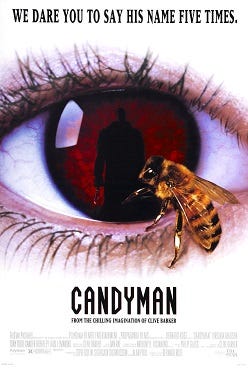
Prior to 1992, when Candyman was released, most horror films took place in a rural area, far from everywhere and close to nowhere. The Texas Chainsaw Massacre would be a great example of that. Maybe they took place somewhere in the woods or a campground. The suburbs pr a small town became likely settings for evil to strike. Not many that I can think of took place in an urban setting, especially not in an American city. Granted many Giallo movies and gothic movies might take place in a large city, but none really explored the seedy side of these metropolitan areas especially in the context of Black America. That is where Candyman directed by Bernard Rose and starring Tony Todd and Virginia Madson brought something new and fresh to the horror genre. Establishing a setting that many people who grew up and live in those neighborhoods could relate to.
What makes our favorite horror movies unique is not just the story, but what we get out of the story. How we interpret what the movie is trying to say.
So, lets first look at the story of Candyman itself.
The Story
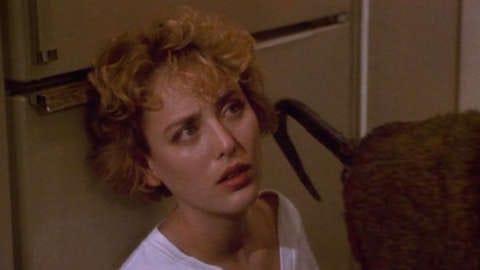
Skeptical graduate student Helen Lyle befriends Anne-Marie McCoy while researching superstitions in a housing project in Chicago’s. Helen learns about the Candyman, a knife-wielding figure of urban legend that some of her neighbors believe to be responsible for a recent murder. After a mysterious man matching the Candyman’s description begins stalking her, Helen comes to fear that the legend may be all too real.
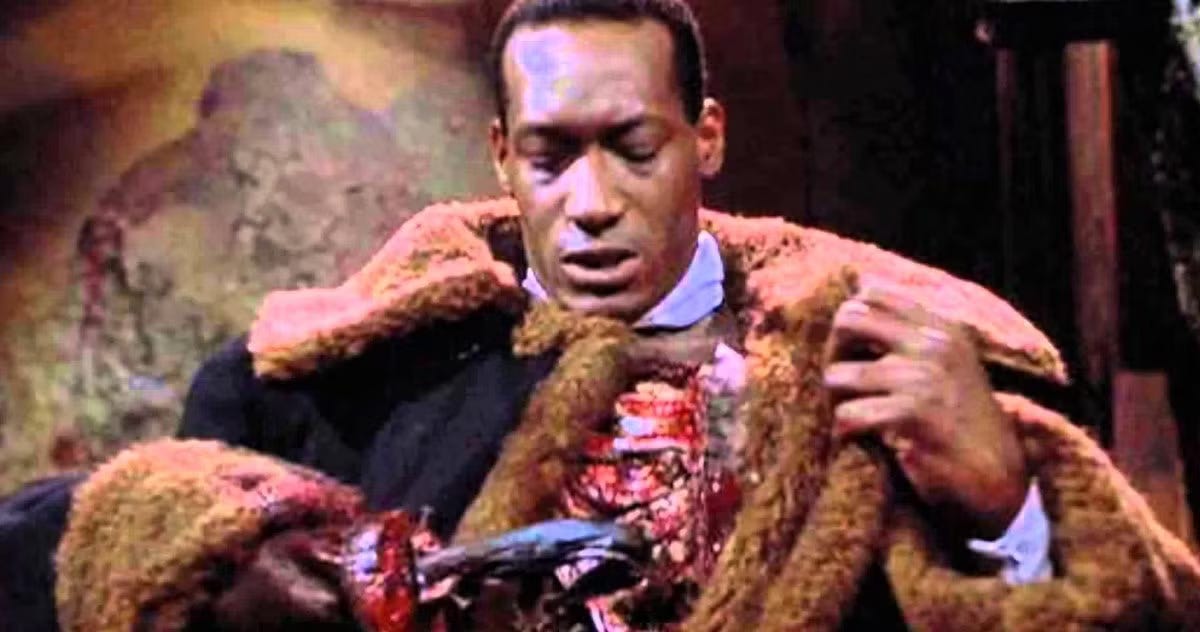
Helen learns about the legend of Candyman, an old urban legend regarding a son of a slave by the name of Daniel Robitaille also known as the Candyman, Say his name while looking in the mirror, five times and he will appear to take you as his victim. It would appear that the Candyman wishes to make Helen, who reminds him of his past love, his victim.
What I learned from the story and what I think it was trying to say?
In my younger years, when I still lived in Indiana, I often traveled to Chicago, where Candyman takes place. There were many times I would watch the White Sox at old Comiskey Park, located in the south side of Chicago in not so great of a neighborhood. I might , also watch the Bulls or Blackhawks in Chicago Stadium or the newer United Center which are located in the southwest part of the city and also not exactly in a desirable neighborhood.
During those travels, I often though it was ironic that I am going to watch a game played by millionaires in the service of billionaire owners right in the middle of a low income area. Observing the run-down neighborhoods and viewing those who might have been homeless made me wonder what life was like for them. Did they live in fear? Was there a sense of despair or hopelessness that surrounded their neighborhood like a fortress they could not escape from. Candyman gives us a glimpse into what it might be like to live in that type of neighborhood in any city in America. Sure, there were movies like Do The Right Thing and Boyz in The Hood, but no horror movies in that setting.
Candyman was based off of a short story written by Clive Barker titled the Forbidden. Barker was approached by writer/director Bernard Rose who expressed his interest in adapting the story. Rose purchased the rights from Barker and the rest is history. The original story was actually based in London and focused on economic class issues where Rose brought the story to Chicago focusing on racism as well as classism, using the urban legend of Daniel Robitaille aka the Candyman played brilliantly by Tony Todd, to convey society’s ills.
Robitaille who in his previous life was murdered by a lynch mob for falling in love with a white woman, doesn’t just represent the sins of the past but, also, regrettably the sins of the present. This could be seen in both 1992 when the movie was released but unfortunately today.
We see the economic despair and the inequality when we meet Helen played by Virginia Madson and her uppity husband, Trevor who live in a affluent apartment, a stark contrast to the apartment building Helen and her friend investigate when they are researching stories of the Candyman. The theme of economic despair is nothing new to the horror genre as it was explored in Texas Chainsaw Massacre, only in a rural area instead of an urban area. The Sawyer family in a way were created by society and a system designed to leave people behind. The same could be said for Daniel Robitialle but those who have endured the inequalities of our economy. The Candyman isn’t your traditional villain, he like another one of Clive Barker’s creation, Pinhead , represents the consequences of our actions.
Stories written by Barker often do hold a mirror up to society, which is probably why Rose was so enthusiastic in making this movie. The sins of the past, another theme often used in horror, always seem to haunt the present. The question is not only do we acknowledge those sins but how do we make things right and avoid repeating those same sins.
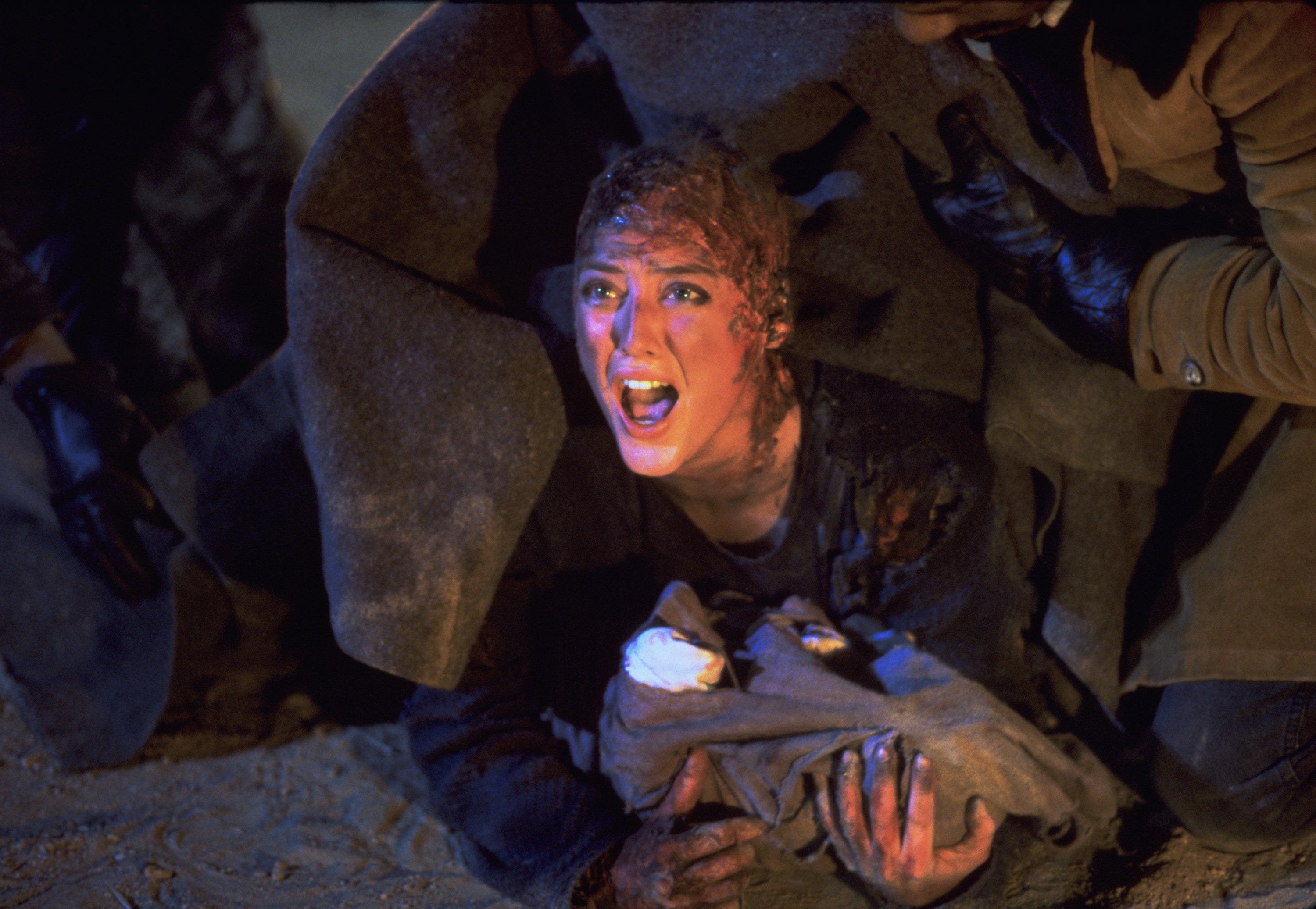
Perhaps, Helen understood this and eventually made the ultimate sacrifice in the end.
Thank you for reading and Happy Black History month.
Such a good movie, and a great write up on it!
I love this film so much. I remember being quite frightened by it when it came out. The whole mirror summoning idea messed with my Bloody Mary/mirror fears, and Candyman himself was just a brilliantly terrifying villain. Then there was the atmosphere of Cabrini Green and the dark history and currents of racism. It's a film that gets under your skin and stays there for a while, and you captured that essence and the reasons behind it so well. Excellent review, Josh! Really enjoyed it!