

Often times in the horror genre and by extension the science fiction genre, extraordinary, fantastical and sometimes absurd situations are presented to us. Entertainment is one reason but typically deep down under the surface, this form of entertainment is attempting to tell us something. Whether it is the situation itself, the monster or the setting are simply metaphors for our everyday life. When we recognize those parallels, it is what makes the movie or book resonate with us.
Ridley Scott’s Alien is a terrific and horrific example of this. On the surface, the sci-fi horror masterpiece from 1979 is your typical monster movie set in outer space--an homage to those campy sci-fi horror flicks of the 1950’s. At least that is how I viewed the movie back when I was thirteen years of age. But over the years, especially as I entered the workforce, spending several years in indentured servitude in what is known as capitalism, I started seeing something else with Alien. The movie serves as a brilliant metaphor for the common workplace that includes workplace personalities, roles, office politics and the blatant pursuit of profits by those who run the organization. Every single one of the crew members of the Nostromo represent a specific type of employee, supervisor or manager that we all have known in our professional lives. Perhaps we might even be one of those characters. Which is why Alien is such a brilliant film. It is an honest and relatable look at the workplace.
So, with this post, I will break down each character and which work related personality they represent.
Dallas (Tom Skerrit) The Laid Back Department Manager:
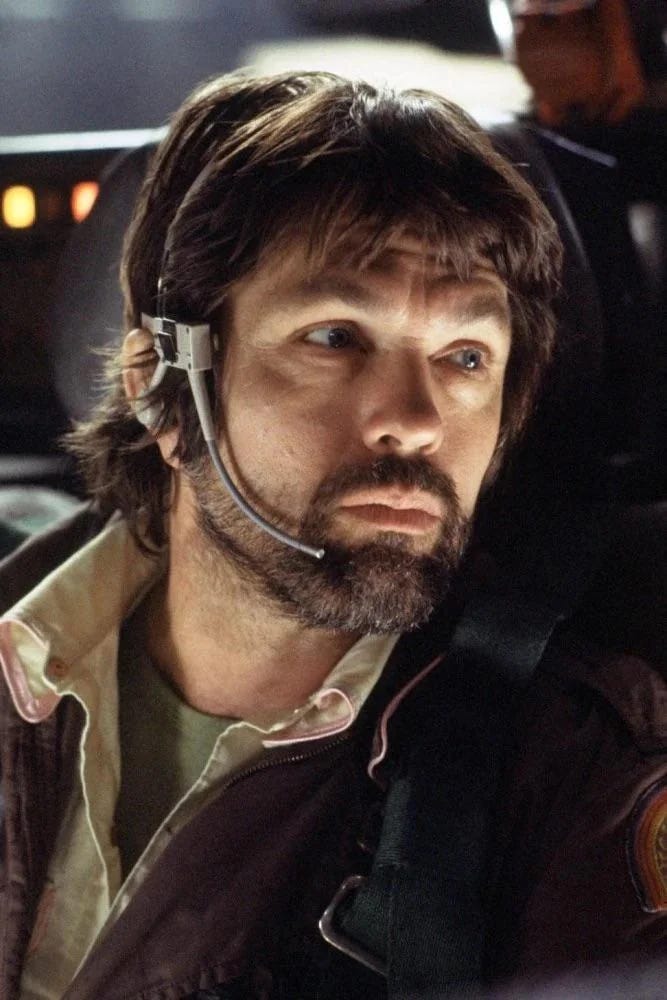
Dallas, who is the captain of the Nostromo, would be your typical ‘go along to get along’ type of department manager. He is fairly laid back and casual in his managing style. He doesn’t really seem to care how the job gets done—only that it gets done. Dallas certainly falls into the role of a macro-manager in that he doesn’t appear to be the type that has to oversee every aspect of the task at hand. This type of approach does endear him to the crew members, and he is well liked and respected because of that.
However, he is not above breaking a few rules now and then if he deems it necessary. Yes, he knows he has to answer directly to the upper management, which in this case is the Company as it is referred to. He figures what they don’t know, won’t hurt them.
This tactic can often serve a manager well as often the powers that be prefer bureaucracy over pure common sense when it comes to procedures. However, in the case of when Kane has been attacked by the face hugger Xenomorph, Dallas recklessly brings him back on board the ship despite the quarantine rules that could impact the rest of the crew.
You get the feeling that Dallas has had a working relationship with Kane for some time and may very well be friends. Dallas might also have the mentality of “No man left behind” Either way his actions causes undo harm to everyone else. I think Dallas at some point realizes he made an error, which is why he volunteers himself to go in the air vents to trap the Xenomorph, which is now on the loose. He probably figures that he fucked up so why let one of his subordinates risk their lives for his mistake.
The lesson to learn from this is that is valuable to be liked and respected by your employees but there are times when you have to do what is best for everyone involved and not let your personal feelings get in the way.
Kane (John Hurt) The Eager and Energetic Supervisor
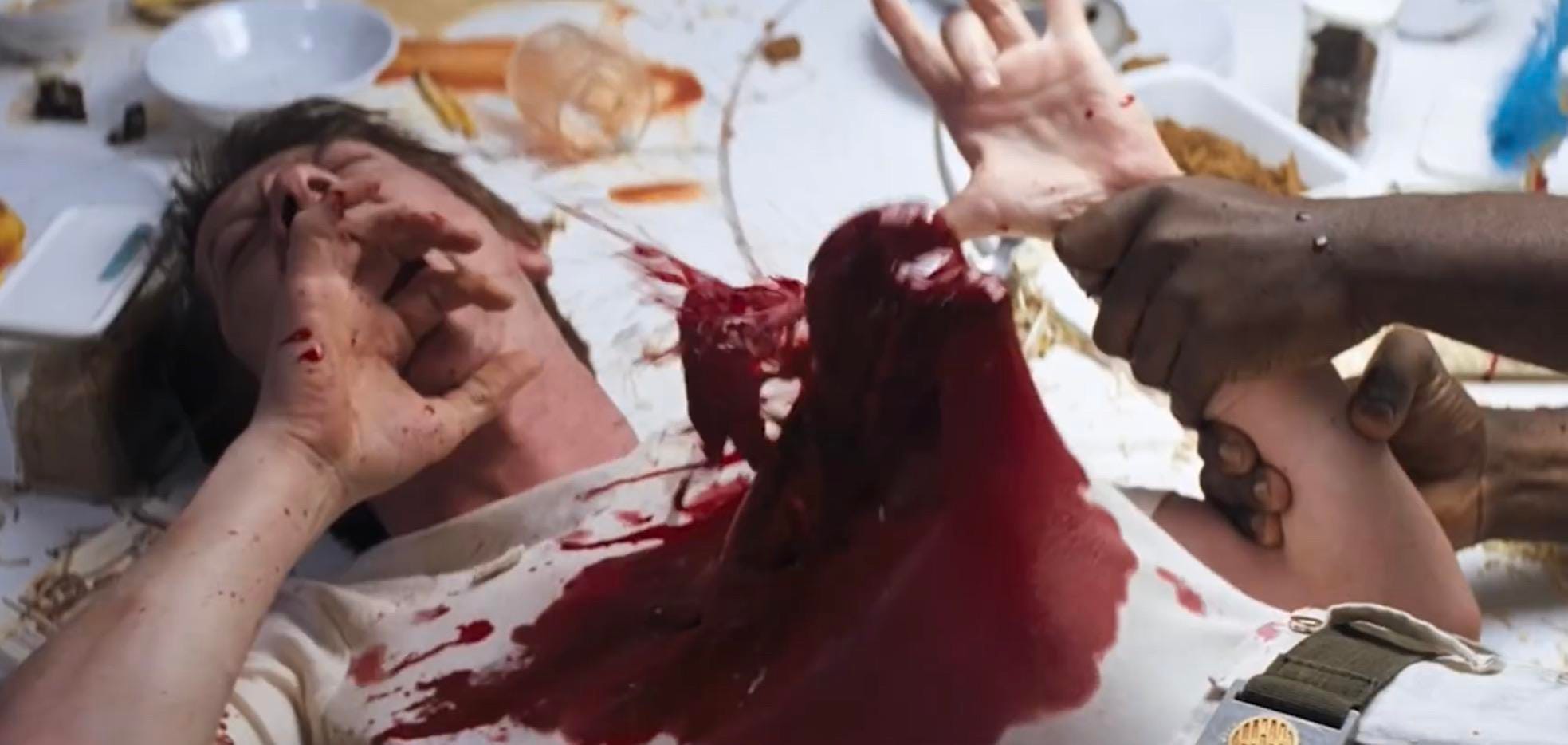
Kane is a difficult character to analyze as he was the first character killed off in the movie. But from what I can observe he represents an office supervisor that everyone gravitates too. This type of supervisor has a certain positive energy about him or her that reflects back on the rest of the staff. They are often eager to help with or lead a new task. They prefer to lead by example rather than words. From his brief time in the movie, it does appear that the entire crew have a great deal of respect and admiration for Kane, which is probably why the decision to let him back on the ship after being attacked by the face hugger was such a dramatic and emotional sequence, specifically for Lambert and Dallas.
We see this in Kane when Dallas is contemplating who will go down on the planet surface to investigate the distress call, Kane immediately volunteers. In which Dallas replies, “That figures.” That statement implies that Kane always volunteers, to the point Dallas fully expected him to do so.
Unfortunately, Kane’s eagerness and curiosity costs him his life.
Ripley (Sigourney Weaver): The Stoic By the Book Supervisor:
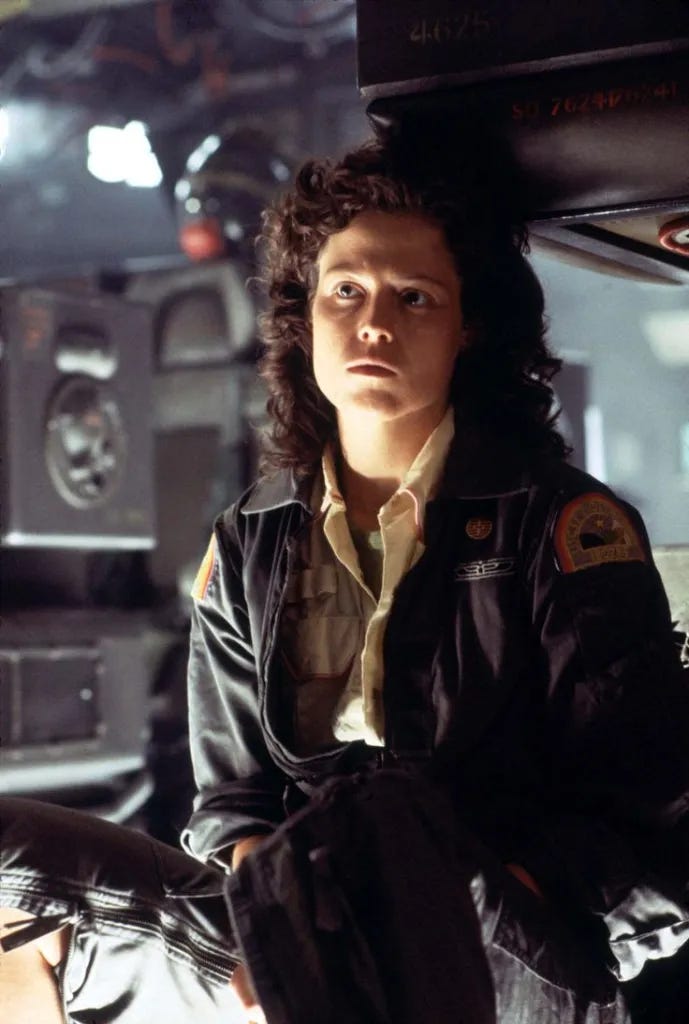
Ripley is the type of supervisor that is all about abiding by the rules and regulations set by upper management. She is the type of supervisor who believes in structure and the rules are there for a reason. We see this in the movie when she refuses to let Dallas, Lambert and Kane back aboard the ship due to the quarantine rule. This type of persona often rubs other workers the wrong way as she is perceived as being abrasive and inflexible. In the director’s cut we see an altercation between her and Lambert that almost becomes physical had Parker not broken up what could have been one hell of a fight.
In another scene, she ventures down to engineering to check on the progress being made by Parker and Brett as they are making repairs. The blue-collar duo resent having someone from middle management sticking their nose where it doesn’t belong.
Through the first half of the movie, Ripley comes across as someone who is not there to make friends and is only concerned that the job gets done. She believes in the Company and the procedures it has created. But a shift happens which proves Ripley is more flexible and adaptable then we thought. After Ash, the chief science officer, disobeys her order and allows the three crew members to re-enter the ship, she begins to doubt Ash’s motives along with the Company’s motives. We see this with a conversation she has with Dallas regarding why Ash has final say on science matters, in which Dallas replies to her, “Because that’s what the Company wants.” Once Ripley assumes command and as access to MOTHER, the main computer running the ship , she learns the Company and by extension Ash’s real objectives. This now causes her to question her own beliefs and faith in the corporate structure. This is what we call (and writers of modern horror, you might want to pay attention to these following words); C-H-A-R-A-C-T-E-R G-R-O-W-T-H. A growth we see that continues to progress in the sequels.
The lesson here is that yes, we should abide by the rules and procedures set forth by our employers, but we should always be back in our minds to question the true motives of those rules and always question authority.
Ash (Ian Holm): The Corporate Stooge
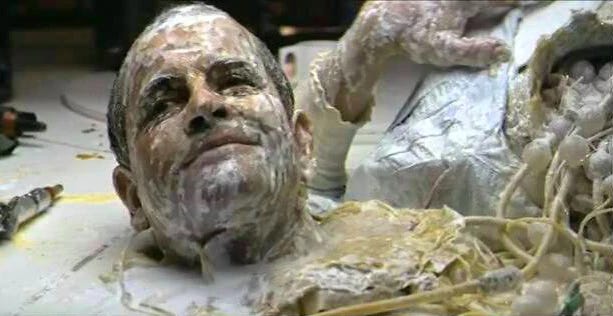
Call him a stooge, a snitch or a company mole, Ash represents that one co-worker, you don’t trust. The co-worker, that you have to be careful about what you say regarding your employer, especially upper management as he will rat you out to gain favor with the higher ups.
Ash represents these very qualities. He is essentially both physically and metaphorically an imposter, as most snitches are typically fraudulent. He appears human but is an android. Everyone thinks Ash is just a science officer but in fact he is an agent sent by the Company to ensure the mission in which only he knows the true nature of; is accomplished.
In Alien, Ash’s actions are completely motivated by what the Company wants. Even if it means breaking one of their own rules-- regarding the quarantine rule. His decision to ignore Ripley’s orders had nothing to do with compassion for Kane. It had everything to do with achieving the Company’s main objective, which was to capture the Xenomorph and bring it back to Earth. Like Ripley, he may quote rules and procedures back and forth. Unlike Ripley, it has nothing to do with the safety of the crew but initiating the Company’s hidden agenda.
Parker (Yaphet Kotto) and Brett (Harry Dean Stanton): The Union Contractors
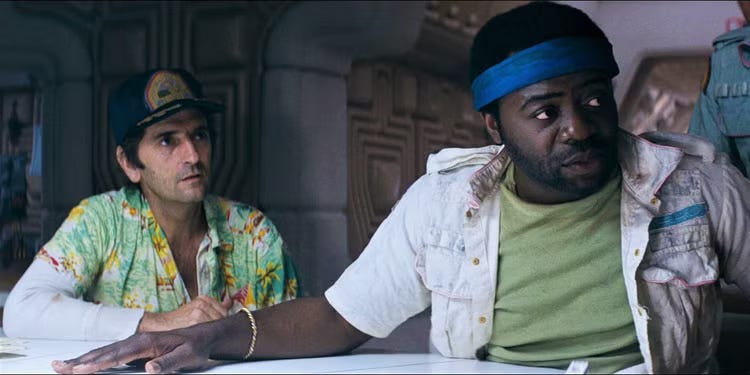
I am writing about Parker and Brett, together, because they represent the same type of work types; the union workers contracted by the Company to come in and do the dirty work. They are just your typical working-class guys that have a special skill set and knowledge. But they are a lot more perceptive than they may appear. Due to the fact they know that whatever employer they are working for will try to screw them out of money.
Right from the beginning Parker and Brett are already staying on top of things, making sure they get their fair share of the bonuses. A topic they bring up on a few occasions in the movie. Unlike the others, they don’t trust the Company. But like the others, they have no idea what the Company is really up to. It is a shame they were in the middle of outer space or else they could have given a call to their union representative.
Like most workers from that side of the fence; Parker and Brett are realists with a good amount of common sense. Probably why they ended up siding with Ripley over her decision not to let Kane back on board. To them even though Ripley could be a pain in the ass, she’s a straight shooter who isn’t going to bullshit them. Parker (the more vocal of the two) might have made the most common-sense statement in the whole movie, “Why don’t they just freeze it?” He has a point.
Unfortunately, Brett is the second victim of the movie, but what we do know about him, despite is awkwardness at times as he just agrees with whatever his louder partner has to say by replying, “Right”, he does seem to have a great skill in his craft and takes great pride in his work as most union members do.
Parker shows he is fairly adaptable and observant and never panics. He does get a little bit pissed at times, but who wouldn’t. It does seem like there was always a tension between him and Ash. I don’t think Parker ever trusted or liked Ash from the beginning. It would appear that his instincts were correct.
Lambert (Veronica Cartwright) : The Burned-Out Office Employee
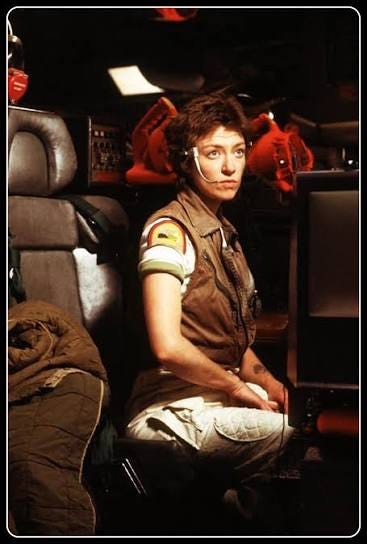
We have all worked with someone like Lambert and depending on how long we have been in the workforce we might even have been Lambert from time to time. Clocking in at 8 and doing the bare minimum as she counts down the minutes until 5 o’clock when she can clock out, hit the bar for a few drinks before going home, having dinner, falling asleep on the couch, only to wake up and do it all over again the next day.
That is the impression I get of Lambert who looks burned out, the entire movie even before shit hits the fan. We see this in the scene where Dallas informs Lambert that she is going down to the planet surface with Dallas and Kane. There is that classic look on her face as she inhales her cigarette—a look that says “Fuck, why me? They don’t pay me enough for this shit.”. Lol.. she looks so thrilled. But that little scene tells us all we need to know about what type of role Lambert would be in a typical office setting.
She doesn’t want any added responsibility. She just wants to get the workday over with. Lambert is not the type of person who handles stress very well at all as evident in the Director’s Cut when she attempts to throw hands with Ripley (a scene I mentioned earlier).
What is ironic though is that the one character who probably should have been one of the first to die, damn near almost survives to the end. This brings up a hilarious alternate ending. What if Lambert was the sole survivor? Can you imagine this character in the sequel, Aliens ?. Her response to Burke would have been pure gold. “Fuck you asshole. I’m not going down to that fucking planet. Are you fucking crazy? Now get me a gin and tonic” Credits role, The End.
Lambert may very well be one of the less talked about characters in the movie but her presence is a realistic reminder how most of us might act in that situation and certainley how our attitude might develop in the workplace.
Jones The Cat: The Co-Worker Everyone Adores.
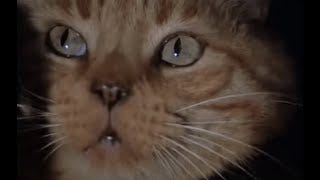
Of course I am going to write about Jones the Cat, after all he does survive along with Ripley. Jones represents that co-worker that everyone loves. He goes about his business, gets his work done, cracks a few jokes and stays out of office politics. The problem lies in that where everyone might like Jones, they underestimate just how smart he may be. We see this when in his own way tries to warn Brett that there is something on this station that even Jones wants no part of. He is the type that knows how to survive a stressful situation by just laying low and waiting for the storm to pass. He hopes that one of his co-workers will come to his aid and save the day. Which happens in the form of Ripley.
The Xenomorph: Corporate Greed
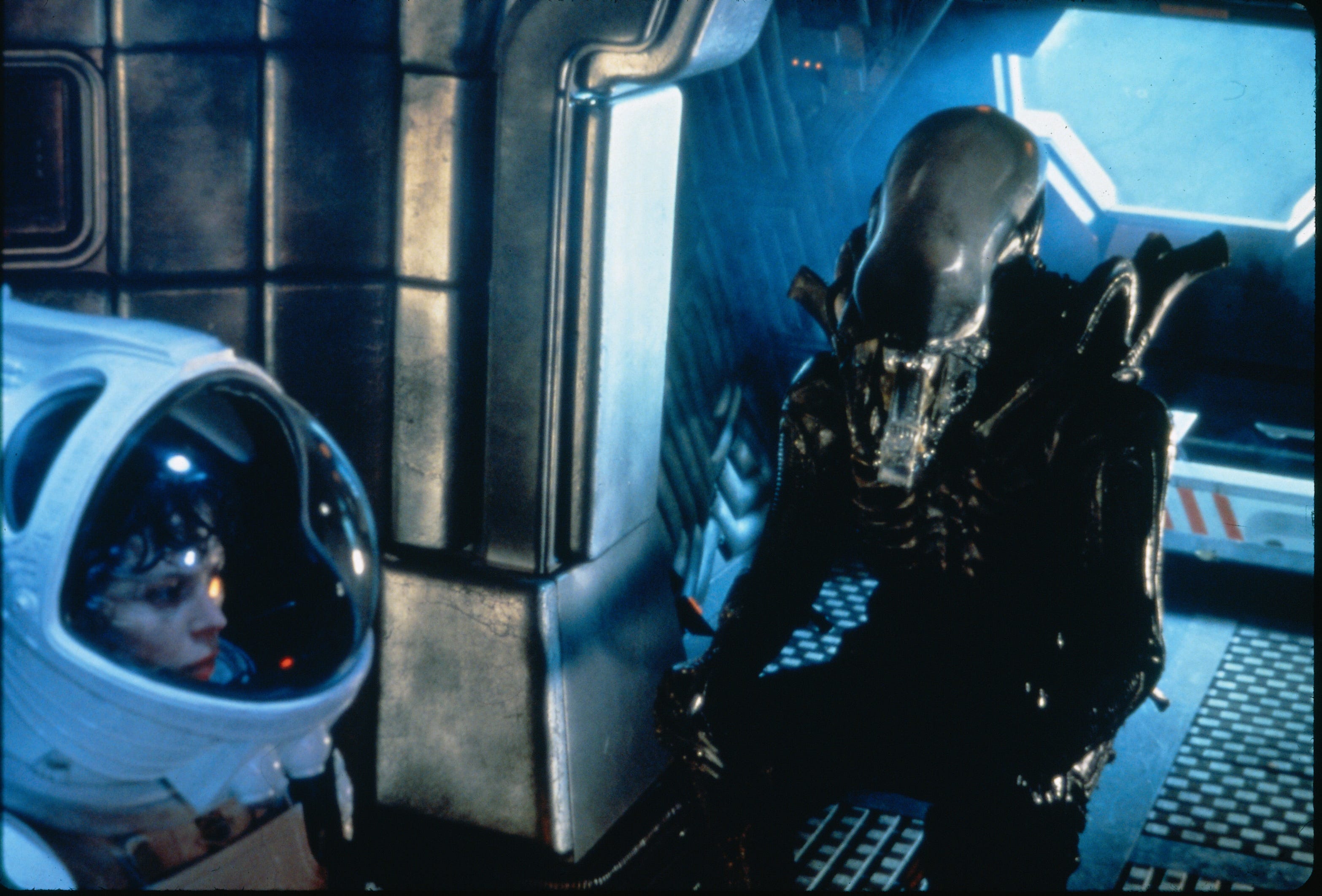
It is no secret that most corporations, with the exception of a few, put record profits over their employees and even their customers, they claim to care about. Even if their apathy makes no sense in the long term. The Xenomorph represents that greed and short sightedness.
For whatever reason, The Company sees dollar signs with the Xenomorph and want it in their possession, and they could care less for the poor saps who have to deal with it. As Ripley would discover in Mother’s computer banks; she and the rest of the crew are expendable.
The mere presence of the Xenomorph along with the confinement of being on a cramped space station in the middle of outer space makes the whole movie a claustrophobic experience. But isn’t that what many employers do to their employees on a everyday basis. Suffocate them. Work them to death so the board of directors can take an extra vacation next year. That is what the Xenomorph represents in this movie. It consumes us, transforms us until we have lost our own sense of self.
Now there are some great companies to work for, who treat and pay their employees well, but they are becoming fewer and fewer.
I am wondering if writer Dan O’Bannon and director Ridley Scott saw this way back in 1970’s and predicted that this would indeed be our future. Much like when George Orwell wrote 1984. They say art imitates life but in this case , maybe it predicted it.
One of my favorite movies!
Great article
Great analysis!